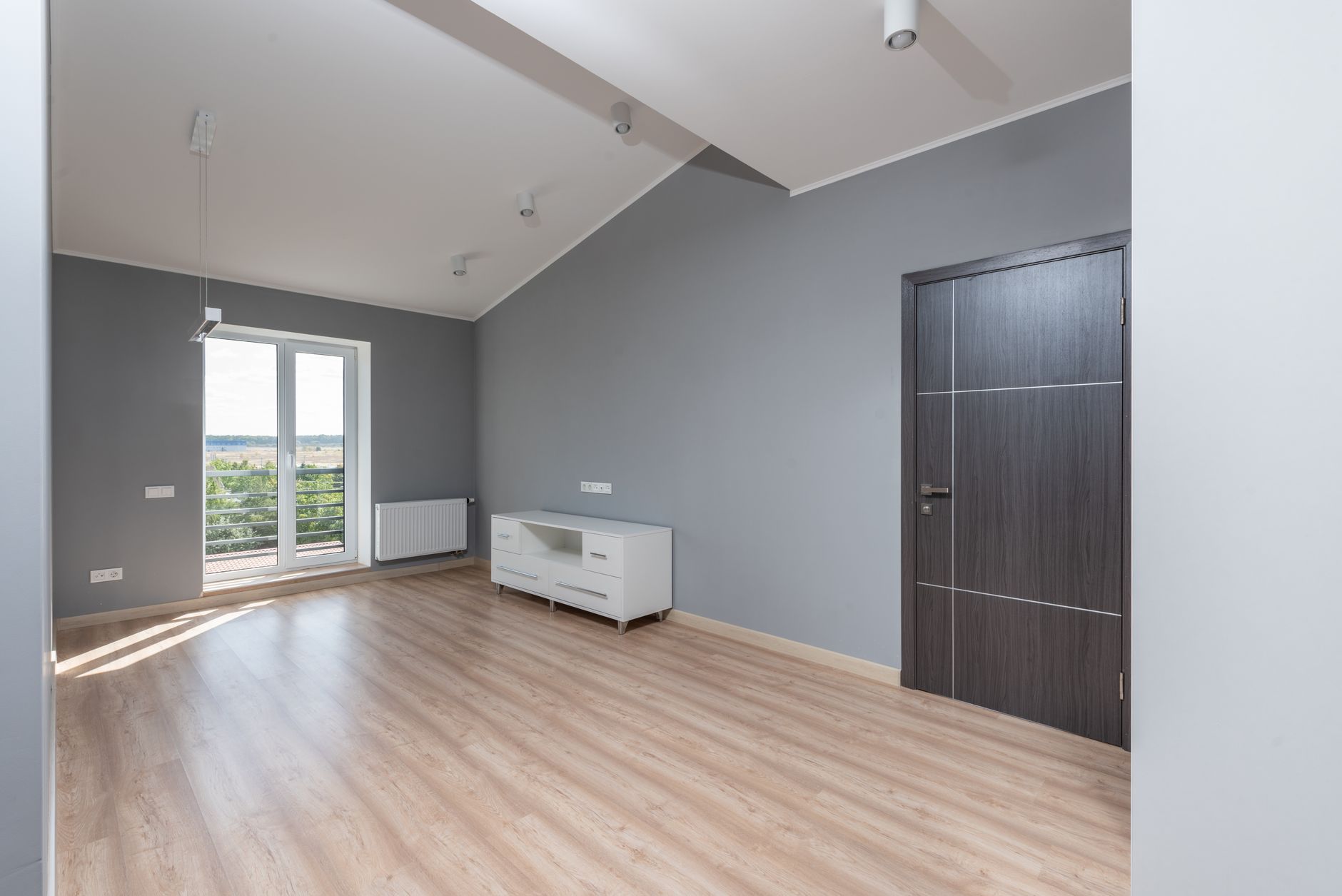
Why Minnesota Winters Move a Wood Floor
Minnesota's winter is not just cold, it is dry — and a wood floor responds to dryness far more than to temperature. Understanding that is the difference between a floor you are worried about and a floor that is behaving normally.
What is actually happening
Wood is hygroscopic: it takes on moisture from the air and gives it back. Through a Minnesota
heating season the indoor air can sit at very low relative humidity for months, and flooring boards
give up moisture and shrink across their width. Come summer the humidity climbs, the boards take it
back, and the gaps close.
This is normal seasonal movement. A gap you can see in February that has closed by July is the
floor doing exactly what wood does. It is not a defect and it is not a bad installation.
When it is not normal
- Gaps that never close. If a gap is still there in August, the boards were
likely installed at too high a moisture content, or something is drying the floor from below. - Cupping — edges higher than the centre of the board — means moisture is coming
from underneath. That is a basement or crawlspace problem, not a floor problem. - Crowning — the centre higher than the edges — often follows a cupped floor
that was sanded flat while still wet.
What to do about it
- Acclimate the material. Flooring should sit in the room it will be installed
in, at the humidity that room actually runs, for as long as the manufacturer specifies. This
matters more in Minnesota than almost anywhere, and it is the step most often skipped. - Keep whole-house humidity in the 30–40% range through the heating season. A
humidifier on the furnace is the usual approach. Below about 25% the movement gets noticeable. - Choose the format for the swing. Narrower boards move less visibly than wide
plank. Engineered wood is more dimensionally stable than solid across a big humidity swing, which
is a real argument for it here rather than a sales line.
Common questions
Should I wait until summer to install hardwood?
Not necessarily — what matters is that the material is acclimated to the conditions the house
actually runs at, not the season on the calendar.
Will a humidifier fix an existing gap?
It will reduce the swing going forward and close a lot of seasonal gapping. It will not fix a
floor installed too dry, and it will not fix a moisture source under the floor.