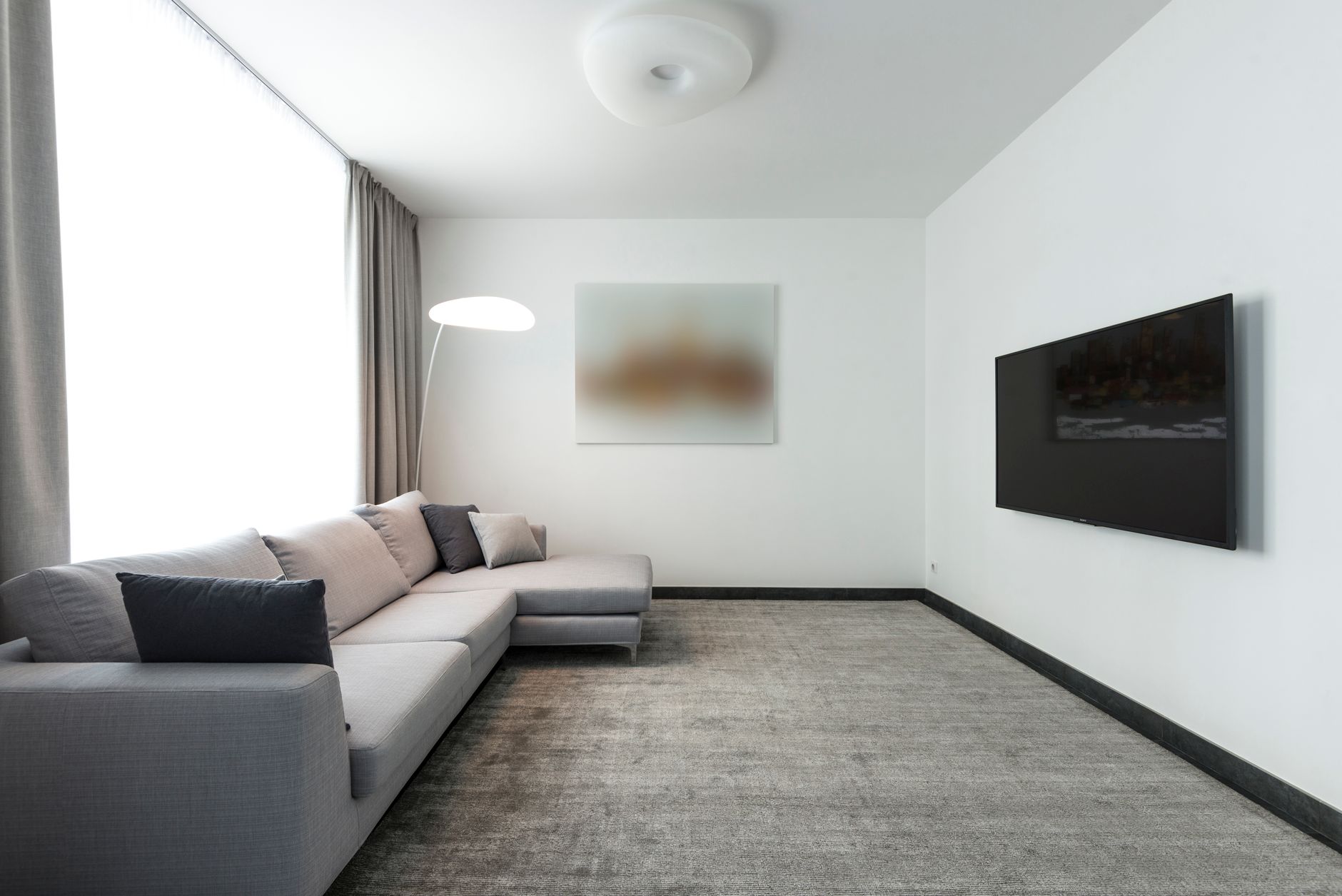
Carpet Installation in Minnesota: Bedrooms, Stairs and Third Floors
Carpet has lost the main floor and kept the bedrooms, and in a Minnesota story-and-a-half or a finished lower level it holds one more job nothing else does as well: making a cold room genuinely comfortable.
Where carpet still wins
Three arguments, and they are all about comfort rather than fashion:
- Bedrooms. Warm underfoot in a state where the heating season runs long, and
quiet in a way no hard surface manages. - Stairs. Carpeted stairs are meaningfully safer than bare wood ones, and in an
old house with steep treads and a tight winder that is not a small consideration. - The upper level of a story-and-a-half. A finished attic level is usually the
least thermally comfortable room in a Minnesota house, and the lower level is the coldest.
Carpet helps both, cheaply.
The pad matters more than the carpet
This is the single most useful thing to know before you shop. The pad determines how the carpet
feels, and it determines how long the carpet lasts — it absorbs the impact that would otherwise
crush the fibre. An expensive carpet on a cheap thin pad will wear out faster and feel worse than a
mid-range carpet on a good one.
For most residential rooms, a 7/16-inch to 1/2-inch pad at around 8 lb density is the sensible
default. On stairs you want a thinner, firmer pad, not a plusher one — a thick soft pad on
a stair makes the nose of the tread unstable underfoot.
What carpet costs in Minnesota
Installed, carpet runs roughly $2 to $8 a square foot in Minnesota, which
makes it the cheapest way to finish a room in the state. Stairs are priced separately and per step,
because a staircase is slow, awkward, hand-fitted work — expect a meaningful per-stair charge on top
of the room rate.
An estimate, not a quote. These are planning ranges for Minnesota, not a quote. What you actually pay depends on your rooms, your subfloor and the material you choose.
Fibre drives most of the rest of the price. Solution-dyed nylon is the durable one and the one
that survives cleaning; polyester is softer and cheaper and crushes sooner in a traffic lane; wool
is excellent and expensive. Triexta sits in between and does well with pets.
The old-house detail: what is under the carpet
Before you re-carpet a room in an older Minnesota house, pull a corner up and look. Narrow-strip
oak under mid-century wall-to-wall carpet is common enough here that it is worth thirty seconds of
checking, and refinishing that floor usually costs less than replacing the carpet twice.
The other thing to look for is tack strip nailed through into a floor you care about, and old
adhesive from a previous glue-down installation. Neither is a disaster; both change the job.
Frequently asked questions
How long should carpet last?
A good nylon carpet on a good pad in a bedroom should give ten to fifteen years. The same carpet
in a main hallway with a family and a dog will show traffic lanes in five, and no fibre avoids
that.
Can carpet go over the existing carpet?
No. The old carpet and pad come up. Layering makes the floor unstable and traps everything that
was in the old carpet underneath the new one.
Is carpet a bad idea for allergies?
It is more complicated than the usual advice. Carpet does trap allergens, which keeps them out of
the air until it is disturbed; hard floors let them circulate but are easy to remove completely. A
low-pile carpet vacuumed properly with a sealed HEPA machine is a reasonable compromise.