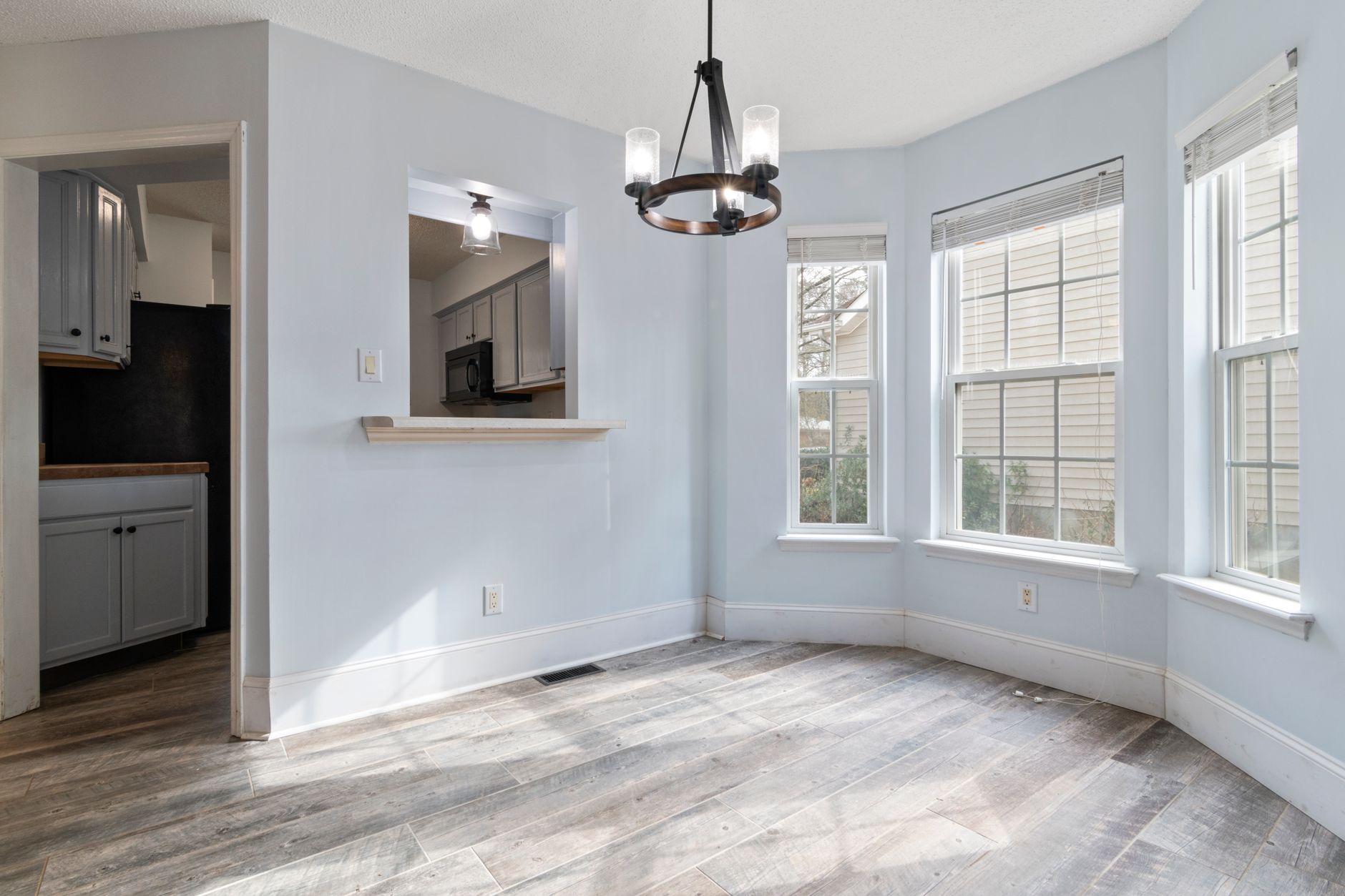
Flooring in Minneapolis generally costs more per square foot to install than the identical material in Woodbury, Eagan, or a newer greater-Minnesota city like Rochester. The material itself prices out about the same across the state. What changes is labor — how much time an installer spends fixing what is underneath the floor before a single plank or tile goes down.
Why does the same floor cost more to install in Minneapolis than in a newer suburb?
Because the house underneath is older, and older houses hide more work. Minneapolis has a median home built in 1951, with 42.8% of its housing stock built before 1940. Compare that to Woodbury, where the median home was built in 1997 and only 1.3% predates 1940, or Eagan, median 1988 and 1.0% pre-1940. That gap in age is the gap in labor.
A house built after 1980 almost always has a plywood subfloor, joists sized to a modern code, and a slab or basement built to current moisture standards. A house built before 1940 might have a diagonal 1×6 plank subfloor, joists that deflect more than current code allows under a rigid tile installation, and layers of old flooring an installer has to deal with before starting. None of that is visible from a listing photo. All of it shows up in the labor line of an estimate.
What is labor actually doing differently on an older floor?
On an older Minneapolis or St. Paul house, a flooring job usually includes several steps a newer-suburb job skips entirely:
- Removing one or more layers of old flooring, which runs $1-$4 per square foot as a planning range — higher where glue-down tile or multiple layers are stacked, and always confirmed by the reader’s own project rather than this range alone.
- Checking a diagonal plank subfloor for soundness and adding a plywood layer where a rigid material like tile or stone needs a stiffer base.
- Testing or addressing joist deflection, since older framing was built to a different structural standard than current code expects for stone and large-format tile.
- Working around transitions, out-of-square rooms, and plaster walls that were never built to a modern tolerance.
St. Paul’s housing stock tracks almost exactly with Minneapolis — median year built 1952, 41.6% pre-1940 — so the same labor considerations apply there. A reader planning hardwood over an old plank subfloor is also dealing with a Minnesota heating season that opens and closes gaps in hardwood every year; that is covered in more detail in why Minnesota winters open gaps in hardwood floors and in acclimating hardwood before a Minnesota heating season.
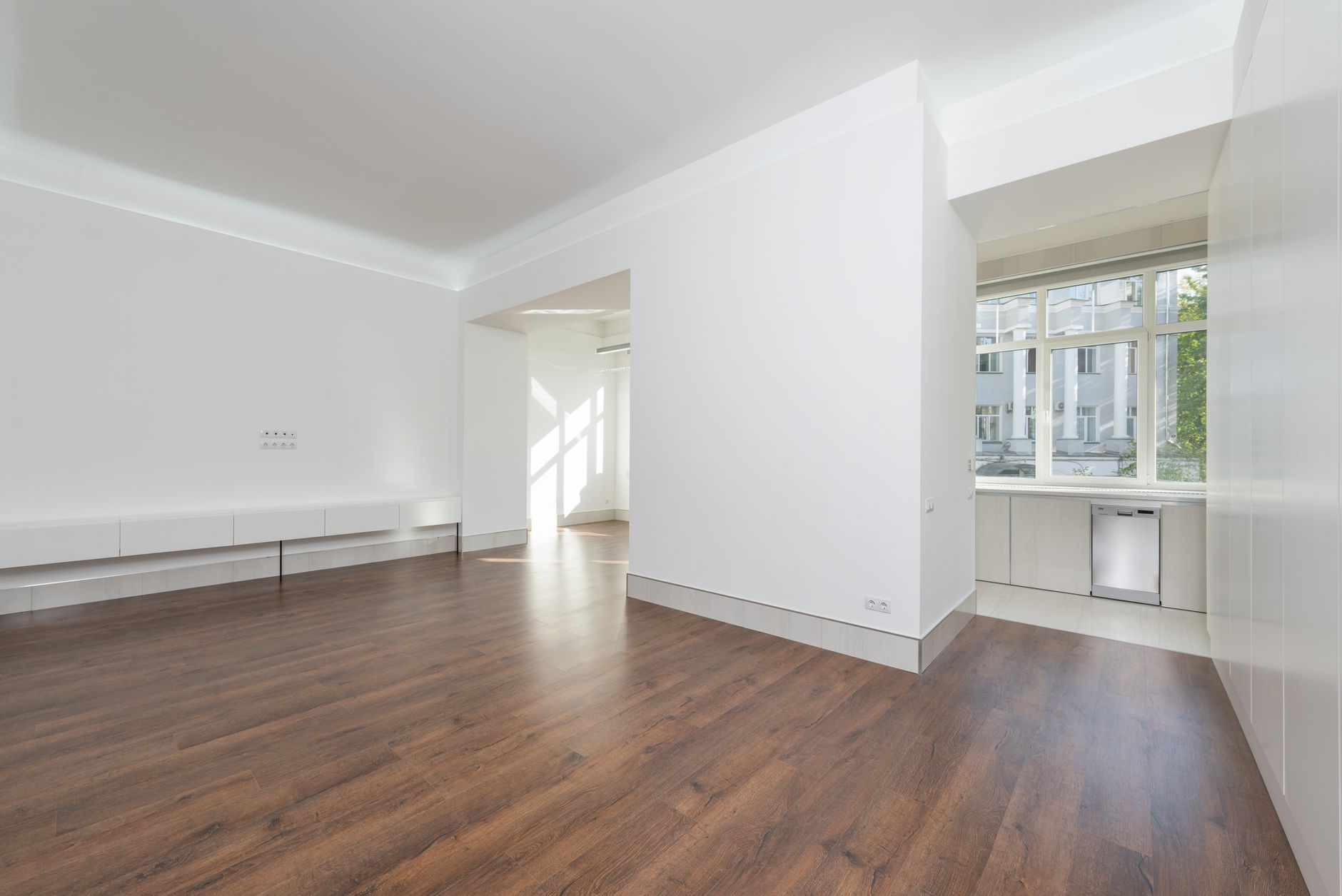
How much of the price difference is material, and how much is labor?
Materials are retailer-set and reasonably consistent across Minnesota — a box of the same luxury vinyl plank or the same oak species costs roughly the same whether it is bought in Minneapolis or St. Cloud. Labor is the local, job-specific variable. Hardwood installed runs $6-$21 per square foot as a planning range across the state; the low end tends to describe a flat, new plywood subfloor in a straightforward room, and the high end tends to describe an older home needing subfloor repair, pattern matching, or custom transitions. That spread is one material behaving very differently depending on what is underneath it, and the final number for any specific house still depends on its own subfloor and layout — the published range is a starting point, not a quote.
The same pattern holds for tile, priced $9-$14 per square foot, and for natural stone, priced $15-$40 per square foot. Stone and large-format tile are the materials most sensitive to an old house’s joist spacing and deflection, which is part of why basement and below-grade installations of these materials get their own treatment at basement flooring in Minnesota: what survives below grade.
Does greater Minnesota look like Minneapolis, or like the new suburbs?
Neither, consistently — greater Minnesota is not one labor market. Duluth has a median home built in 1951 and 42.8% of its stock pre-1940, which is essentially identical to Minneapolis’s age profile. St. Cloud sits in between, with a median built in 1981 and 11.6% pre-1940. Rochester is newer still, median 1989 and 7.7% pre-1940, closer in age to a built-out suburb than to Duluth or the Twin Cities core.
That means a flooring job in Duluth is more likely to run into the same diagonal-subfloor and old-joist conditions as a job in Minneapolis, while a job in Rochester is more likely to resemble the straightforward prep of a newer suburb like Bloomington (median 1972, 3.3% pre-1940) or Brooklyn Park (median 1980, 3.1% pre-1940). Plymouth, median 1988 and 1.8% pre-1940, sits at the newer end of that range along with Eagan and Woodbury. The nine-city breakdown at Minnesota flooring cost by city lays out the housing-stock numbers behind each of these.
What should a reader actually budget, city by city?
There is no single number that applies to “Minneapolis flooring” or “greater Minnesota flooring” — the published ranges for each material are statewide planning figures, and where a given house falls inside that range depends on its age, its subfloor, and its layout. Carpet runs $2-$8 per square foot, laminate $3-$10, luxury vinyl plank $2-$12, and refinishing existing hardwood $3-$8 — all as planning ranges, all shaped by site conditions more than by zip code. Stairs run $55-$130 per step, and older staircases with tighter stringers or uneven risers tend toward the higher end regardless of city.
The material-by-material and city-by-city ranges are collected at Minnesota flooring cost by material and by city, and a reader with an actual room to measure can run those numbers against their own project at the flooring cost estimator. It produces a planning range, not a quote — only an in-person look at the subfloor can produce that.
For a side-by-side sense of what each material is actually good at and where it tends to fail, the flooring materials hub covers all eight options the site tracks, room by room guidance lives at Room by Room, and ongoing maintenance questions are collected at Care & Repair.
Where do permits and licensing fit into the cost gap?
Flooring installation in Minnesota often falls under a specialty exemption from the state’s general contractor licensing requirement, which is covered in detail at flooring installer licensing in Minnesota: the exemption. That exemption is a state-level licensing question, separate from permits. Permits are enforced locally under the Uniform Construction Code, so whether a given flooring job in Minneapolis, Duluth, or a smaller greater-Minnesota city needs one — and what it costs — is a question for the reader’s own municipality, not a statewide answer. Broader hiring questions, including how to verify a contractor’s registration, are at Hiring & Permits, and a contractor’s registration status can be checked directly through the Minnesota Office of the Attorney General’s contractor registry.
Older homes also raise a separate, material-specific question before demolition starts: some flooring and adhesive products installed before the 1980s can contain asbestos. That is a testing question for an accredited lab, not something a planning article can rule on, and it belongs on the reader’s own pre-demolition checklist alongside subfloor inspection.
Frequently asked questions
Is flooring material itself more expensive in Minneapolis than in greater Minnesota?
Generally no. Material pricing is set by retailers and manufacturers and holds fairly steady across the state. The cost difference between cities shows up almost entirely in installation labor, driven by the age and condition of the house.
Does an older Minneapolis home always cost more to floor than a new suburban one?
Not automatically. A Minneapolis house with a plywood subfloor from a 1990s remodel can prep out about the same as new construction. The citywide age statistics describe a pattern, not a guarantee for any single address.
Will a house in Duluth or St. Paul run into the same issues as one in Minneapolis?
Likely, yes. Duluth’s median year built (1951) and pre-1940 share (42.8%) track almost exactly with Minneapolis, and St. Paul (1952, 41.6% pre-1940) is close behind. The same diagonal-subfloor and joist considerations tend to apply.
How does a reader get an actual number instead of a range?
The flooring cost estimator takes material, square footage, and basic site conditions and returns a planning range built from the figures this site publishes. It is a planning tool, not a quote — a firm number still requires someone looking at the actual subfloor.
MN Floors is an independent Minnesota flooring resource. We do not sell or install flooring, we do not quote jobs, and nobody from this site will call you. Cost figures here are published planning ranges for Minnesota, not quotes — what you actually pay depends on your rooms, your subfloor and the material you choose, and the final price depends on your project. Photography is licensed stock used to illustrate materials and rooms; it is not work by anyone connected to this site. Building code and permit requirements are enforced locally in Minnesota, so confirm anything regulatory with your own municipality before you rely on it.
Any prices mentioned are indicative only. Tool prices move constantly and vary by market, by retailer, and by whether a kit includes batteries or a charger — check the current price yourself before deciding.
Featured image: Photo by Curtis Adams via Pexels.