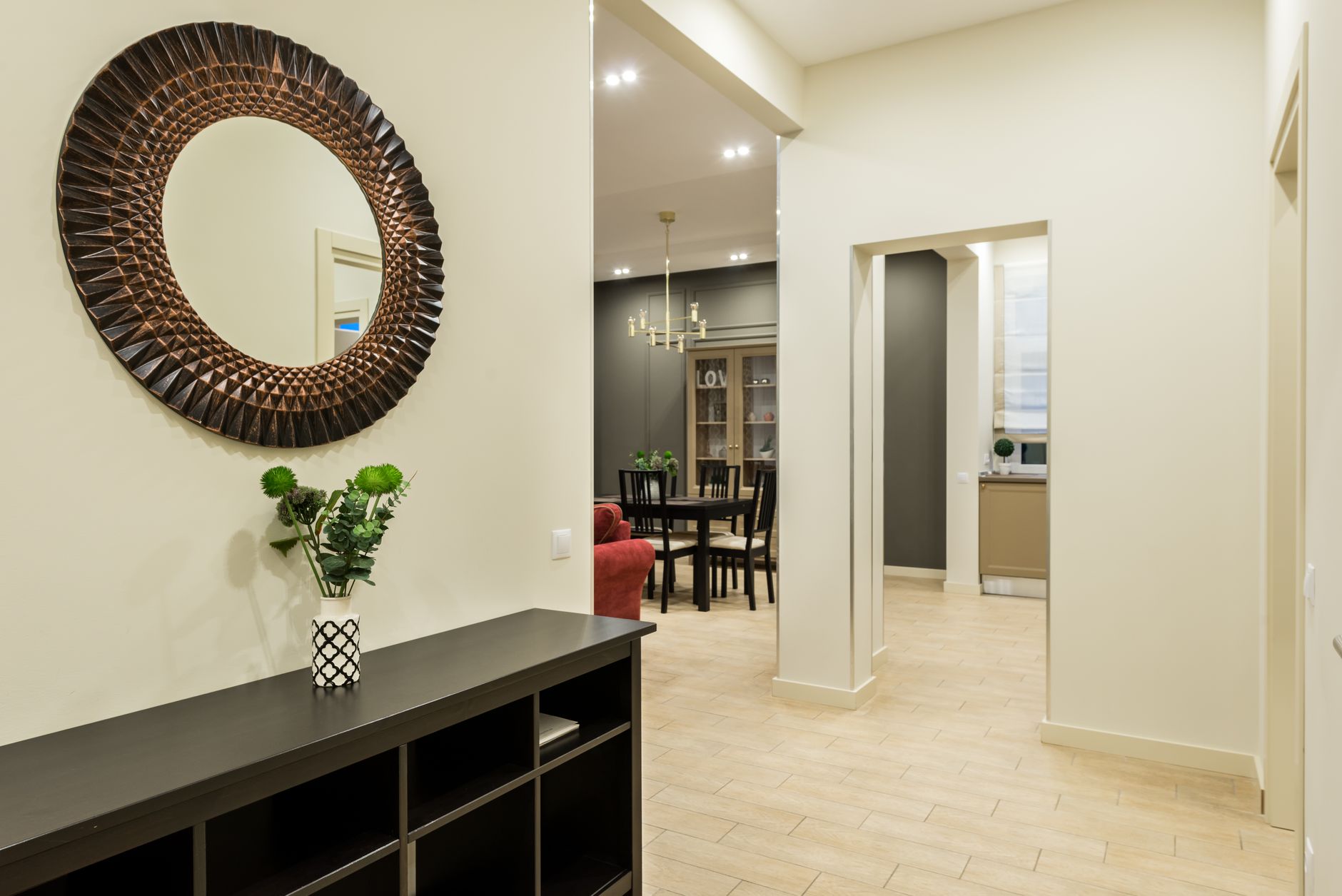
Porcelain tile, sealed natural stone, and waterproof luxury vinyl plank are the three materials that hold up to five months of road salt, sand, and melting snow tracked across an entry floor. Solid hardwood and laminate are the two to avoid in that exact spot, no matter how good they look on day one.
An entry or mudroom is not a normal room. It is the one floor in the house that gets direct contact with chloride deicers, abrasive sand, standing meltwater, and boots that have been through both. The material question here isn’t about style — it’s about what survives repeated chemical and moisture exposure without staining, swelling, or wearing through its finish.
What flooring actually holds up in a Minnesota mudroom?
The materials that take road salt and snowmelt without damage share one trait: they are not harmed by standing water or chloride salts sitting on the surface for hours at a time. That narrows the field to porcelain or ceramic tile, sealed natural stone, and waterproof luxury vinyl plank (LVP) with a fully sealed, solid core — not every product sold as “waterproof” is built the same way underneath.
Carpet, solid hardwood, laminate, and engineered wood with a thin veneer are all vulnerable in different ways — to staining, to swelling at the seams, or to the finish breaking down under repeated salt exposure. Those materials belong in rooms with controlled foot traffic, not at the point of entry.
Why does road salt destroy some floors faster than others?
Road salt is corrosive and hygroscopic — it pulls moisture out of the air and holds it against the floor surface longer than plain water would. On porous or finished-wood surfaces, that combination etches finishes, leaves white mineral residue, and eventually breaks down adhesives and grout.
Unglazed or honed stone and unsealed grout lines are porous enough to absorb chloride brine, which is why stone used in an entry generally needs a penetrating sealer reapplied on a schedule, not a one-time treatment. Glazed porcelain tile has almost no absorption at all, which is the main reason it dominates entry applications nationally — tile’s low porosity, not styling, is what makes it durable here.
LVP with a rigid or solid core and fully sealed seams resists salt in the same way vinyl resists water generally: nothing gets underneath the wear layer to damage the substrate. The weak point on LVP isn’t the plank — it’s a poorly sealed seam or a cut edge at a transition strip where moisture can work its way under the surface over years.
Is tile the right call for an entry?
Yes, for most entries and mudrooms, porcelain or ceramic tile is the strongest match for salt, sand, and meltwater. It does not stain, does not absorb chloride, and can be mopped and resealed at the grout lines without replacing anything. Installed tile in this site’s published range runs $9 to $14 per square foot, and that range always needs to be read as a planning figure — grout pattern, tile size, waterproofing membrane under the tile, and local labor rates all move the final number for a specific entry, which is what the flooring cost estimator is built to walk through.
Tile’s real weakness in a mudroom isn’t durability — it’s comfort and slip risk. A cold tile floor in a Minnesota entry in January is unpleasant underfoot, and a wet, snow-tracked tile surface can be genuinely slick unless the tile has a textured or matte finish rated for wet traffic. A high-gloss tile chosen for a showroom look is the wrong tile for a Minnesota side door.
Tile is also unforgiving over a weak or deflecting subfloor. Older Minnesota homes with undersized joists or diagonal board subfloors instead of plywood can flex enough under foot traffic to crack rigid tile at the grout lines over a few winters — a subfloor problem that shows up as a flooring complaint years after installation.
What about luxury vinyl plank in a mudroom?
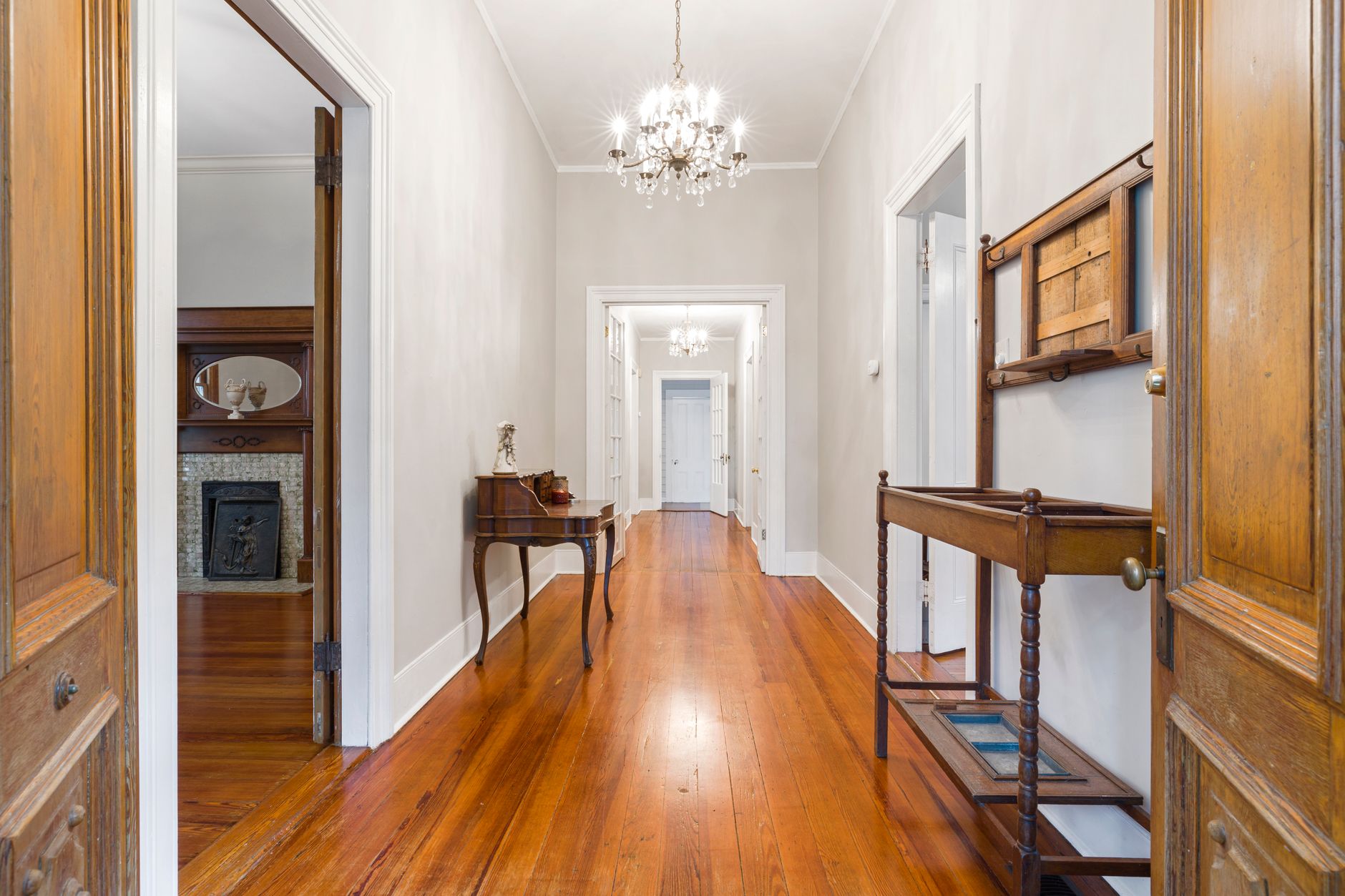
LVP with a solid or rigid core and factory-sealed seams is a legitimate second choice for an entry, and often the more comfortable one — it’s warmer underfoot than tile and more forgiving if someone slips. Installed LVP in this site’s published range runs $2 to $12 per square foot, again as a planning range rather than a quote; product tier, underlayment, and subfloor prep are what separate the low end from the high end of that spread.
The failure point for LVP in a salt-and-snowmelt entry is almost always the seams and the transition edge, not the field of the floor. A mudroom with a floor drain or a transition to an unheated three-season porch puts real moisture at exactly those joints, and a product chosen for a dry living room isn’t automatically rated for that. Reading a product’s actual water and seam specifications matters more here than the LVP category label does — not every plank sold as waterproof performs the same way at a cut edge.
LVP also scratches more visibly under sand and road grit than tile does, especially in a lighter finish. A darker, textured plank with embossed grain hides grit scratching far better than a smooth, pale one.
Does hardwood ever belong in an entryway?
Generally, no — not in the zone that takes direct boot and salt traffic. Solid hardwood’s finish is a film sitting on top of wood, and chloride-laden meltwater sitting on that finish repeatedly is exactly the condition that breaks finishes down and eventually grays or cups the wood underneath. Installed hardwood runs $6 to $21 per square foot in this site’s published range, and refinishing an existing floor runs $3 to $8 — both planning ranges that depend heavily on species, finish, and the condition of what’s already there, never a number to quote from directly.
Where hardwood does show up near entries in Minnesota is a few feet back from the door, in a transition zone most of a home’s traffic actually crosses after boots come off. That’s a design choice, not a salt-resistance strategy — the hard, wet-traffic work still needs to happen on tile or LVP closer to the door itself. For a wider look at where hardwood performs and where it doesn’t, the flooring materials hub breaks down all eight common materials by room rather than by marketing claim.
Minnesota’s heating season adds a second reason hardwood is a poor entry choice specifically: the same dry winter air that opens gaps between boards elsewhere in a house (covered in more depth at why Minnesota winters open gaps in hardwood floors) is happening in a room that’s also getting direct moisture exposure at floor level — a combination that stresses wood more than either condition alone.
What does it cost to redo an entry or mudroom floor?
Entries and mudrooms are small rooms, which keeps total project cost down even at a higher per-square-foot material cost, but a few line items are easy to underestimate in planning:
- Removing an existing floor — carpet, vinyl, or old tile — runs $1 to $4 per square foot in this site’s published range and is often skipped in a quick mental estimate.
- A waterproofing membrane under tile, common in entries with a floor drain, is a real add that a bare per-square-foot tile price does not include.
- A stair transition from the entry up into the main house, if one exists, is priced separately at $55 to $130 per step rather than folded into the floor’s square-foot rate.
- Natural stone, if it’s the material chosen for the entry, runs $15 to $40 per square foot — a wider range than tile because stone type and sealing requirements vary far more than porcelain does.
Every one of those figures is a planning range published by this site, not a quote, and the only way to get from a range to an actual number for a specific entry — its square footage, its subfloor condition, its transitions — is to run it through the flooring cost estimator or get a measured bid. For how these per-material ranges compare city to city across Minnesota, the installed flooring cost hub and the Minneapolis vs. Greater Minnesota cost comparison cover the geographic side of the same question.
What does an older Minnesota entry actually have underneath it?
This is where Minnesota’s housing stock changes the job. The median Minnesota home was built in 1965, and a quarter of the state’s homes predate 1940 — Minneapolis and St. Paul carry median build years of 1951 and 1952, with more than 41 percent of housing in each city built before 1940 (U.S. Census Bureau, American Community Survey 2020-2024 5-year estimates). An entry in one of those older homes was frequently never built as a mudroom at all — it was a small enclosed porch or vestibule added later, with its own subfloor history separate from the rest of the house.
Diagonal 1×6 board subfloor instead of plywood, a step-down transition at the original exterior wall line, and framing that was never leveled to the rest of the main floor are all common finds once an old entry gets opened up. None of that is a reason to avoid tile or LVP in an old house — it’s a reason to budget time and money for subfloor leveling and prep before material selection matters at all. The Old Minnesota Houses archive and the refinishing vs. replacing comparison for a 1920s Minneapolis bungalow both deal with exactly this kind of pre-1940 substrate surprise in more depth.
A mudroom built as part of a below-grade or walkout basement entry has a different set of problems — groundwater and slab moisture rather than tracked-in snowmelt — and is covered separately at basement flooring in Minnesota: what survives below grade.
Does a mudroom floor replacement need a permit?
Replacing a floor finish in an existing entry — tile over tile, LVP over an existing subfloor — typically does not trigger a building permit on its own, but Minnesota permits are enforced locally under the Uniform Construction Code, not by a single statewide rule. A project that also involves moving a floor drain, altering framing, or changing the entry’s footprint is far more likely to need one. The only reliable answer for a specific address is the homeowner’s own municipality, not a general rule published here.
Hiring help for the work is a separate question from permitting. Minnesota has a specialty exemption that applies to flooring-only installation work, which changes what licensing actually applies compared to a full remodel — that distinction is covered in detail at flooring installer licensing in Minnesota: the exemption. Anyone verifying a contractor before hiring can check Minnesota’s contractor register directly through the Minnesota Office of Attorney General rather than relying on a company’s own claims. Broader guidance on vetting and hiring for flooring work specifically is collected in the Hiring & Permits archive.
What keeps an entry floor performing after it’s installed?
Material choice only does part of the job — a sealed tile floor with grout that’s never been resealed, or an LVP floor with salt residue ground into the texture every week all winter, will both wear faster than they should. A boot tray or interior mat that catches the worst of the salt and sand before it reaches the finished floor is a cheap first line of defense, and rinsing salt residue off the surface periodically — rather than letting it sit and dry repeatedly — matters more for longevity than almost any product choice. Ongoing maintenance specifics for each material are covered in the Care & Repair archive, and broader room-specific flooring guidance lives in the Installation & Prep archive for subfloor and transition prep questions that come up before material selection.
MN Floors is an independent Minnesota flooring resource. We do not sell or install flooring, we do not quote jobs, and nobody from this site will call you. Cost figures here are published planning ranges for Minnesota, not quotes — what you actually pay depends on your rooms, your subfloor and the material you choose, and the final price depends on your project. Photography is licensed stock used to illustrate materials and rooms; it is not work by anyone connected to this site. Building code and permit requirements are enforced locally in Minnesota, so confirm anything regulatory with your own municipality before you rely on it.
Any prices mentioned are indicative only. Tool prices move constantly and vary by market, by retailer, and by whether a kit includes batteries or a charger — check the current price yourself before deciding.
Featured image: Photo by Max Vakhtbovych via Pexels.