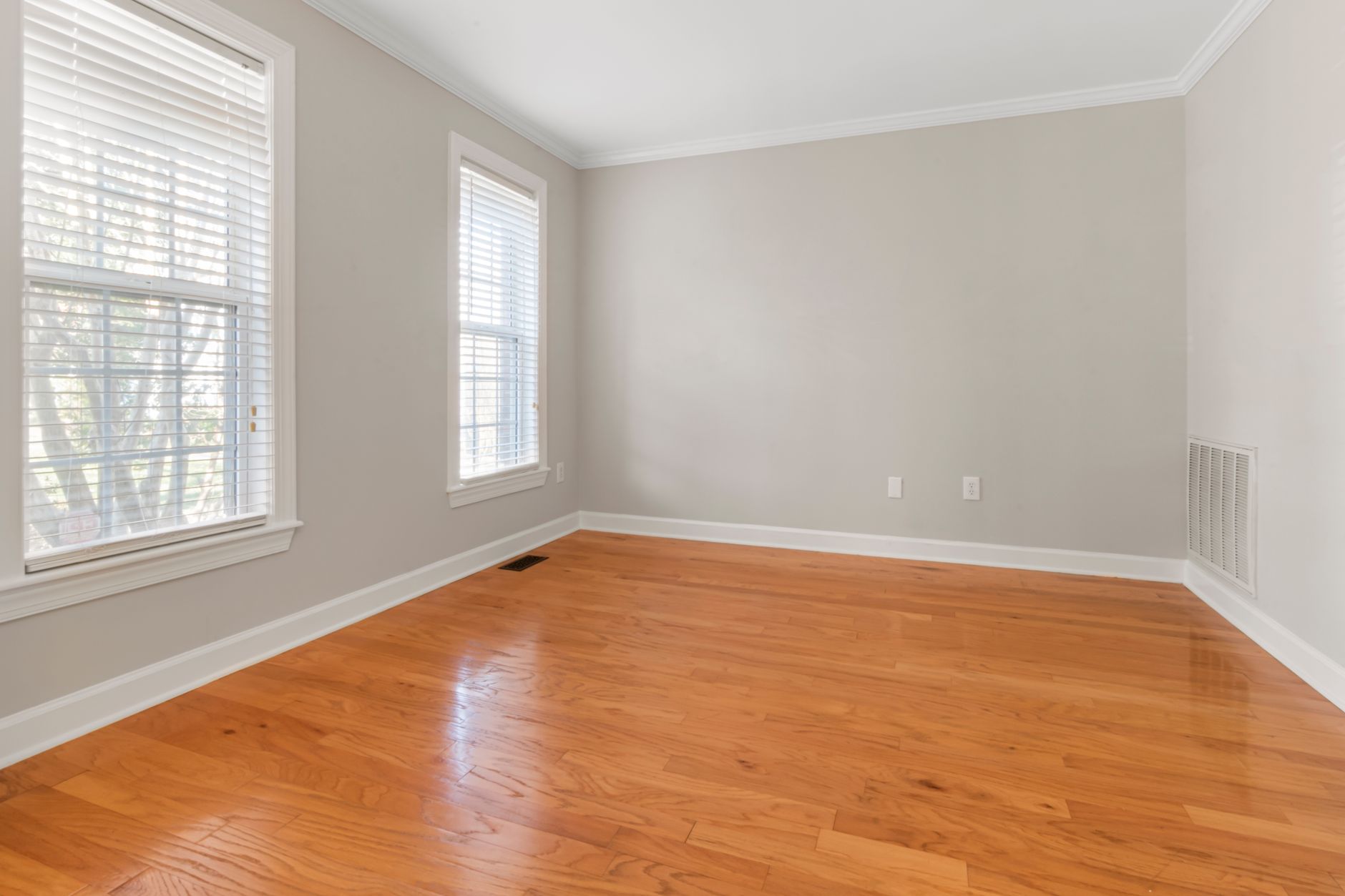
Refinishing is the right call in most 1920s Minneapolis bungalows, because the original narrow-strip oak under the carpet or old finish is usually still there and still structurally sound. Replacing makes more sense when the wood has already been sanded too thin, water has reached the subfloor, or the room needs a different material entirely.
Minneapolis has a median home built in 1951, and 42.8% of its housing stock predates 1940 — one of the oldest profiles of any city on the site’s city-by-city housing stock comparison. A bungalow built in the 1920s sits well ahead of even that median. The floors in it were almost certainly installed before the house had a furnace that ran all winter, and that history matters more to this decision than most homeowners expect.
How do you know if the original floor is worth refinishing?
Pull a heat register cover or check a closet corner where carpet tack strip has pulled away. If you see narrow strip oak — usually 2 1/4 inches wide — with at least 1/8 inch of wood above the tongue, it can likely be sanded again. If the boards are already thin, cupped unevenly, or show old nail heads sitting proud of the surface, refinishing gets riskier.
A floor that’s been sanded three or four times over a century starts to run out of material. Each refinish removes a small amount of wood, and a bungalow floor installed in the 1920s has had a lot of decades to accumulate those passes. A flooring professional can confirm remaining wood depth with a probe at a vent or threshold; this isn’t something to guess at from the surface alone.
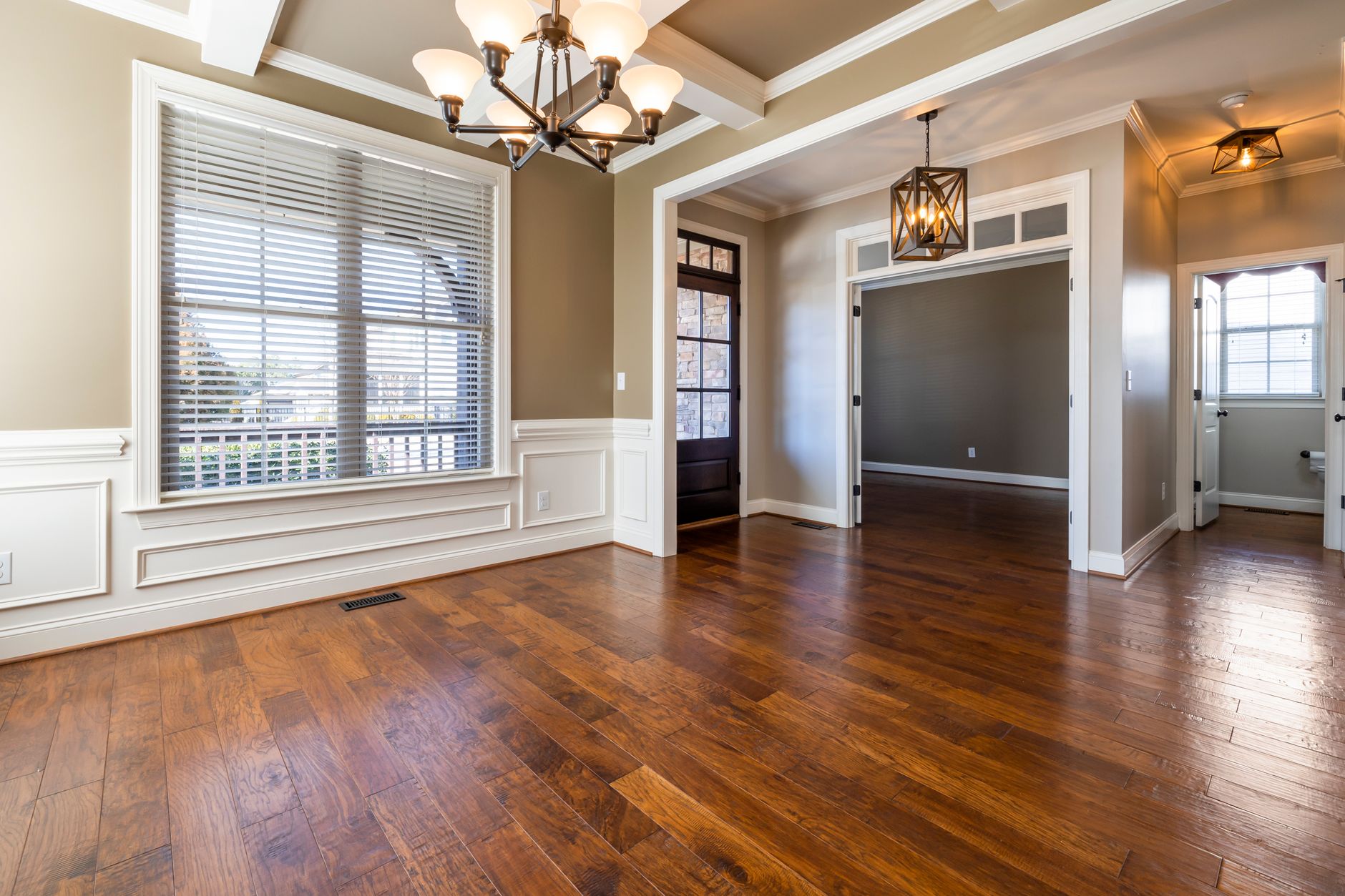
What does a 1920s bungalow subfloor mean for the decision?
Many of these houses were built with diagonal 1×6 plank subfloors rather than the plywood underlayment used in newer construction. That’s generally good news for refinishing — diagonal plank is rigid and doesn’t telegraph seams the way thin plywood can — but it changes what happens if you decide to replace instead.
Removing old flooring down to a plank subfloor in a 1920s house sometimes reveals gaps, old patches, or boards that have moved over a century of seasonal cycling. That’s a normal finding, not a crisis, but it’s worth budgeting the possibility of subfloor repair into a replacement project rather than assuming a clean, flat surface underneath.
What does refinishing actually cost in a bungalow this size?
Refinishing existing hardwood runs $3 to $8 per square foot on this site’s published ranges. That spread covers everything from a simple screen-and-recoat on a floor in good shape to a full sand-stain-finish job on boards that have taken more wear. These are planning ranges, not a quote — the final number depends on the floor’s condition, the finish chosen, and how many rooms are connected.
A typical bungalow main floor — living room, dining room, and a connecting hallway, often all original oak laid in one continuous run — tends to land toward the middle of that range because the square footage is modest but the rooms are interconnected, which usually means refinishing them together for a consistent sheen. The flooring cost estimator is built to work through a specific room layout rather than a rule of thumb.
When does replacing make more sense than refinishing?
Replacing is the better answer in a handful of recurring situations in these houses:
- Water damage has reached the subfloor, not just the surface finish — staining alone doesn’t rule this out, but cupping that doesn’t flatten after drying usually does.
- The floor has already been sanded down near or past the tongue, leaving no safe margin for another pass.
- A prior owner installed something over the original oak — sheet vinyl, glued-down parquet, tile — in a way that damaged the wood underneath when removed.
- The homeowner wants a different look entirely, such as wider boards or a different species, rather than restoring the original.
New hardwood installed runs $6 to $21 per square foot depending on species, width, and finish, and removing the old flooring first typically adds $1 to $4 per square foot. Both are planning ranges from this site’s published figures; an installer walking the actual rooms sets the real number. The materials overview covers where hardwood is the right call and where it isn’t — a sunporch or below-grade room, for instance, is not a place solid oak belongs regardless of how the rest of the house is finished.
What about the rooms added later — kitchens, baths, sunporches?
Bungalow kitchens and baths were frequently redone decades after the 1920s, which means the flooring in those rooms often has nothing to do with the original oak in the living and dining rooms. It’s common to find layers — linoleum over wood, then vinyl over that — rather than a single refinishable surface.
In those rooms, the refinish-vs-replace question usually doesn’t apply at all; the decision is which new material to install. Luxury vinyl plank ($2-$12 per square foot) and tile ($9-$14 per square foot) both show up often in bungalow kitchen remodels, each for different reasons the materials guide covers in more detail. A basement or three-season porch addition raises a separate set of moisture questions covered in the guide to below-grade flooring.
Does refinishing or replacing a bungalow floor need a permit?
Permit requirements for flooring work are set and enforced locally in Minnesota under the state’s Uniform Construction Code, not by a single statewide rule. Whether a given refinishing or replacement project triggers a permit — and whether it needs to be pulled by a licensed contractor or can be owner-pulled — is a question for the homeowner’s own municipality, not a general answer that applies statewide.
Minnesota does carry a specialty exemption for flooring-only work that’s worth understanding before hiring anyone for either kind of project; the flooring licensing exemption page explains what it covers and what it doesn’t. The Minnesota Office of Attorney General’s contractor registration search is the way to verify anyone’s standing directly.
Frequently asked questions
Can a 1920s oak floor be refinished more than once more?
Often yes, if enough wood remains above the tongue — usually checked at a vent cover or threshold. A floor already sanded several times over the decades may be close to its limit, which is worth confirming before committing to a full refinish.
Will refinishing fix gaps between boards?
Refinishing addresses the surface finish, not the gaps themselves. Minnesota’s heating season regularly opens seasonal gaps in solid wood floors as indoor humidity drops; the guide to winter gaps in hardwood explains why they open and when they’re a cosmetic normal versus a sign of a larger problem.
Is it cheaper to refinish than to replace?
Generally yes on a per-square-foot basis — refinishing runs $3 to $8 per square foot versus $6 to $21 installed for new hardwood — but that comparison only holds if the existing floor is actually in refinishable condition. These are planning ranges only; a specific bungalow’s numbers depend on its own square footage and the floor’s current state.
Does new hardwood need to acclimate before installation in an older house?
Yes, and this matters more in Minnesota’s climate than in most states. New wood brought into a bungalow during the heating season needs time to adjust to indoor humidity before installation; the guide to acclimating hardwood before heating season covers how that process works and why skipping it causes problems later.
For a broader sense of what either path costs across the region, the flooring cost hub and the Minneapolis vs. Greater Minnesota cost comparison break down installed and refinishing ranges by material and by location. Project planning and hiring questions specific to older homes are collected in the installation and prep archive and the hiring and permits archive.
MN Floors is an independent Minnesota flooring resource. We do not sell or install flooring, we do not quote jobs, and nobody from this site will call you. Cost figures here are published planning ranges for Minnesota, not quotes — what you actually pay depends on your rooms, your subfloor and the material you choose, and the final price depends on your project. Photography is licensed stock used to illustrate materials and rooms; it is not work by anyone connected to this site. Building code and permit requirements are enforced locally in Minnesota, so confirm anything regulatory with your own municipality before you rely on it.
Any prices mentioned are indicative only. Tool prices move constantly and vary by market, by retailer, and by whether a kit includes batteries or a charger — check the current price yourself before deciding.
Featured image: Photo by Curtis Adams via Pexels.